What you're actually renting
A roll-off dumpster is the open-top rectangular container that arrives on a tilt-bed truck and slides — rolls — off onto your driveway or the street. It differs from the permanent bin behind a restaurant: a roll-off is temporary by design, sized in cubic yards, delivered and retrieved as part of a bundled service.
A standard rental bundles four things: delivery, a rental period (commonly seven to ten days), pickup, and disposal of the contents up to an included weight limit. That bundle is why quotes vary so much and why the decoder section below exists — the sticker number means nothing until you know what the bundle includes.
The everyday use cases run the familiar range: home cleanouts, kitchen and bath remodels, roofing tear-offs, yard and storm debris, and construction or demolition waste. Each maps to a size and sometimes to a debris rule, which is exactly what the next two sections settle.
Real numbers: the honest national price table
Here is what the industry's own market data shows, in print. A typical residential roll-off rental in the United States runs $294 to $480 per job, with a national average around $385. Aggregated industry figures put the average nearer $485 with a full observed range of roughly $244 to $928 — the spread between a small cleanout container in a cheap market and a large heavy-debris container in an expensive one.
Read as bands by size: 10-yard containers occupy the bottom of the range, 15- and 20-yard containers cluster around the averages, and 30- to 40-yard construction containers reach toward the top. Your local quote will land somewhere in these bands — and now you know whether it's a fair spot.
What moves the price within the band: location (disposal fees vary sharply by region), debris type (heavy material like concrete changes both the container rules and the disposal cost), weight (every bundle includes a cap; overage bills by the ton), and duration (days beyond the included period bill per day). None of this is mysterious — it is just rarely written down where renters can see it.
The size decision, with math
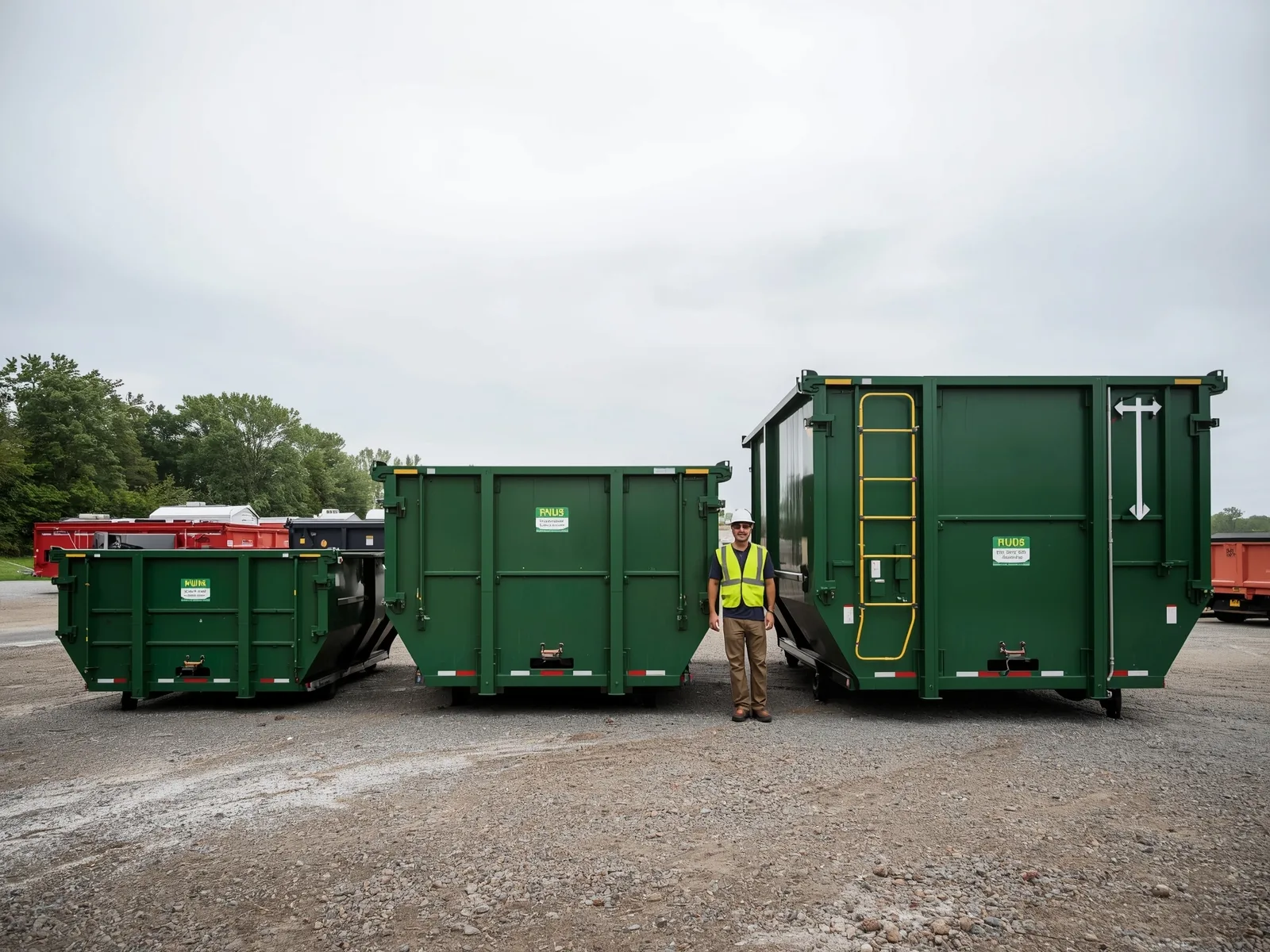
Sizes are listed everywhere and decided nowhere, so here is the method. Roll-off sizes are cubic-yard volumes: a 10-yard container holds ten cubic yards of debris, roughly a footprint of a car and a half. The industry's own footnote — one cubic yard is about six 33-gallon trash bags — is actually a usable estimator when you take it seriously.
Do the walk-through: count your project in 33-gallon-bag equivalents. A one-room cleanout that stacks to about 60 bags is 10 cubic yards on the nose. A kitchen remodel's cabinets, counters, and flooring typically land between 60 and 90 bags — the 15-yard container. A whole-home cleanout or a roofing job with disposal-heavy shingles pushes into 20-yard territory, and 30- to 40-yard containers belong to construction and demolition, not house projects.
Then apply the weight correction: volume is not the only limit. Dense debris — concrete, dirt, brick, tile — hits the weight cap long before the container looks full, which is why heavy-debris jobs often require a smaller container filled only partway, per the provider's rules. If your project is mostly dense material, say so when you request the quote; it changes the right answer.
The quote decoder: five questions every quote must answer

'Bundled pricing' is only clear when you can see the bundle. Before any dumpster quote gets your money, it should answer these five questions in writing. One: how many rental days are included, and what does each extra day cost? Two: what weight is included, and what is the overage rate per ton? Three: is delivery and pickup inside the quoted number, or itemized on top? Four: what does an extension or a swap-out (empty and return) cost mid-project? Five: which items are prohibited, and what fee does finding one in the load trigger?
A provider that answers all five without friction is quoting honestly; a provider that answers with 'don't worry about it' is answering question five for you. When Dumpsterenta routes your request, these five answers are what we tell providers the quote must include — that standard is the entire reason this page exists.
Where it sits: driveway, street, and the permit rule
The permit rule fits in one paragraph, so here it is. On your own property — driveway, yard — no permit is needed. On a public street or right-of-way, most municipalities require a right-of-way permit, arranged through your city and sometimes handled by the provider for a fee. If the truck can reach your driveway, the driveway is almost always the simpler answer.
Surface protection is the part experienced renters do and first-timers learn the hard way: a loaded container concentrates serious weight on its rails and wheels. Lay plywood sheets where the container will sit and where the truck's rails touch down — the plywood trick — and insist on a flat, firm surface. Slopes and soft ground are how containers arrive level and leave with your driveway's imprint.
What goes in, what can't
Accepted in a standard roll-off: household junk, furniture, renovation debris (drywall, lumber, cabinets, flooring, tile), roofing shingles, and yard waste. Heavy materials — concrete, dirt, brick, asphalt — are usually accepted with conditions: a dedicated heavy-debris container or a fill-line limit, because of the weight math covered above.
The banned list, honestly summarized: hazardous and liquid waste tops it — paints and solvents, chemicals, motor oil, fuel — alongside tires, most batteries, refrigerants and appliances containing them, and certain electronics depending on the region. These items carry disposal-facility restrictions, which is why finding them in a load triggers the fees question five warned you about. When in doubt, ask before it goes in; the answer is free and the fee is not.
How booking works here, in plain words
Dumpsterenta is a quote-routing service, and we would rather say so plainly than imitate a fleet we don't own. Here is the whole model: you leave your email through the form on this page; we follow up promptly to collect the short details a real quote needs — your ZIP code, project type, likely size, and dates — and route the request to roll-off service covering your area. You get a quote to judge with the decoder above; if it is not right, you owe nothing and you keep the guide.
Why route through us at all? Because the request arrives pre-structured: the five decoder questions attached, the size estimate already reasoned through, the debris type flagged. Providers answer structured requests faster and more precisely — which is the difference between a quote and a real answer.
Timing: how fast a container can be on your driveway
In most markets, next-day delivery is normal and same-day is sometimes possible early in the week; Mondays and the first of the month book heaviest, because everyone's project starts then. Order when your demolition date is set, not when the pile already exists — a container that arrives a day before the tear-out beats one that arrives three days after.
Mid-project flexibility is worth asking about up front (question four of the decoder): if the container fills early, a swap-out keeps the job moving; if the project runs long, extension days cost far less arranged in advance than discovered on the invoice.